
Janka Hardness: A Comprehensive Guide

Choosing the right wood for your projects can be a daunting task, but understanding the various aspects of wood, such as hardness, can help guide your decision-making. In this article, we’ll dive deep into the concept of Janka Hardness and how it can affect your choice of wood for different applications.
Definition of Janka Hardness
The Janka Hardness is a measure of the resistance of wood to denting and wear. In simple terms, it tells you how hard a wood species is. This information can help you determine if a particular wood is suitable for specific applications, such as flooring or furniture.

Image Credits: www.familyhandyman.com
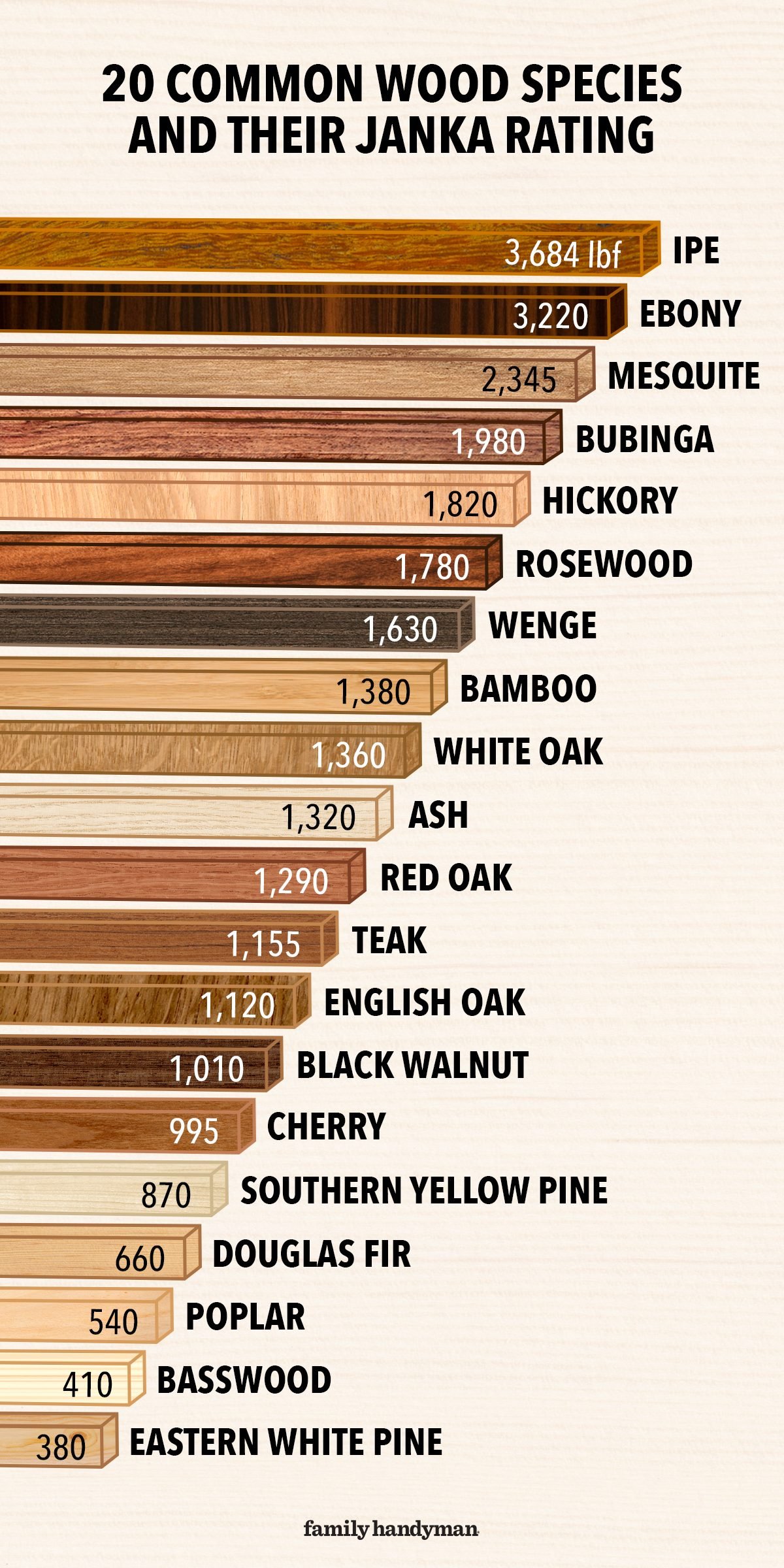
Importance of Janka Hardness in Wood Selection
Janka Hardness plays a crucial role in selecting wood for various applications, including:
- Wood Flooring: The Janka rating of wood species is an essential factor to consider when selecting hardwood flooring. Woods with higher Janka ratings are more resistant to dents and scratches, making them ideal for high-traffic areas.
- Furniture: Furniture made from hardwoods with higher Janka ratings are more durable and can withstand daily wear and tear, ensuring a longer-lasting piece.
- Cabinetry: Cabinetry requires wood that is strong and resistant to wear. Woods with higher Janka ratings are perfect for this purpose, as they can withstand the demands of daily use.
Janka Hardness Testing Method
The Janka Hardness test measures the force required to embed a 0.444-inch steel ball halfway into a wood sample. This force is expressed in pounds-force (lbf) and is used as a relative measure of the wood’s hardness.
Janka Hardness Scale
The Janka Hardness Scale is a numerical scale that ranges from the softest woods, like balsa, to the hardest woods, like Brazilian Walnut. The higher the number, the harder the wood.
Domestic Hardwoods and Their Janka Ratings
Exotic Hardwoods and Their Janka Ratings
- Brazilian Cherry: 2,820 lbf
- Brazilian Walnut: 3,684 lbf
- Tigerwood: 2,160 lbf
- Purpleheart: 2,520 lbf
- Teak: 1,155 lbf
Custom Country Woods and Janka Hardness
At Custom Country Woods, we understand the importance of Janka Hardness in selecting the perfect wood for your projects. We provide a wide range of domestic and exotic hardwoods, live edge slabs, and lumber to cater to all your woodworking needs.
How Janka Ratings Impact Custom Country Woods’ Live Edge Slabs and Lumber Selection
Considering the Janka ratings of our woods helps us ensure that we offer only the best quality live edge slabs and lumber for your specific needs. Whether you’re crafting a dining table or constructing a hardwood floor, our knowledgeable staff will help you select the ideal wood based on Janka Hardness and other factors.
Caring for Different Hardwood Types
Hardwoods with different Janka ratings may require different care methods. Softer woods may be more prone to dents and scratches, requiring extra precautions, while harder woods may need specific cleaning products to maintain their luster.

Conclusion
Janka Hardness is a crucial aspect of selecting the perfect wood for your projects. By understanding how Janka ratings can affect your choices, you can make informed decisions to ensure the durability and longevity of your creations. At Custom Country Woods, we’re here to help you find the ideal live edge slab or lumber that meets your specific requirements and Janka Hardness preferences.
FAQs:
What is the highest Janka Hardness rating?
- The highest Janka Hardness rating is 5,060 lbf, which belongs to the Australian Buloke tree. However, it is not commonly used in woodworking projects.
What is the softest wood on the Janka Hardness scale?
- Balsa wood, with a Janka rating of around 70 lbf, is the softest wood on the scale.
Do engineered hardwoods have Janka ratings?
- Engineered hardwoods are made from multiple layers of wood, so their Janka ratings can vary depending on the species used for the top layer.
How does Janka Hardness affect the price of wood?
- Generally, woods with higher Janka ratings tend to be more expensive due to their increased durability and resistance to wear. However, other factors like availability, demand, and sustainability can also influence the price.
Can the Janka Hardness of wood change over time?
- The Janka Hardness of wood can change slightly over time due to factors like moisture content and temperature fluctuations. However, these changes are typically minor and do not significantly impact the wood’s performance.
Where to Buy Lumber & Slabs?

Overview of Custom Country Woods
Custom Country Woods is a lumber and sawmill company located in Conawengo Valley, New York. The company is dedicated to providing high-quality hardwoods to woodworkers and DIY enthusiasts, and is committed to offering only the finest materials for all of your woodworking needs.
Information on How to Contact Custom Country Woods
To learn more about Custom Country Woods and its selection of hardwoods, you can visit our online shop or call us directly at (716) 969-7132. Our friendly and knowledgeable staff will always be available to answer any questions you may have and to help you find the perfect piece of wood for your next project.
In conclusion, if you are looking for high-quality Lumber or Live Edge Slabs, Custom Country Woods is the perfect place to start. With its wide selection, competitive prices, and expert customer service, you can be sure that you will find exactly what you are looking for at Custom Country Woods.